

Pterygoid implants
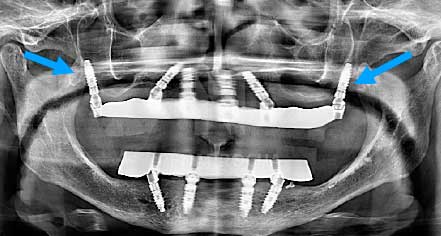
Have you been told that you don’t have enough bone to place dental implants in the posterior part of your upper jaw? At Instituto de Implantología IDIM in Valencia led by Drs. Peñarrocha, we specialise in pterygoid implants, an advanced implant technique that makes it possible to rehabilitate an atrophic posterior maxilla without the need for bone grafts or sinus lifts.
When conventional implants are not an option, pterygoid implants make use of the posterior bone anchorage area to achieve stable fixation and facilitate fixed dental rehabilitation.
Choosing this technique requires an individualised assessment and careful planning, as it involves a complex anatomical region. At our dental implant clinic in Valencia, we carefully assess each case to determine whether pterygoid implants are the most suitable option and how to integrate them into a functional and stable rehabilitation.
Fill in the contact form if you need to book an appointment at our dental implant clinic in Valencia:
Pterygoid Implants: A Variation of angulated Implants
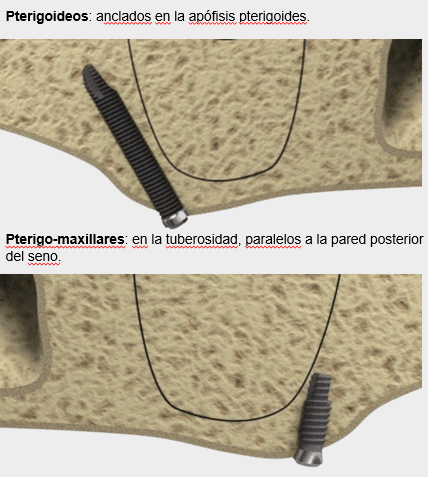
The pterygoid implant technique was first described by Tulasne in 1989 and has since been referred to by various names in the literature, including pterygomaxillary implants, pterygoid implants and tuberosity implants. Its main purpose is to place implants in the pterygoid region to address the challenges associated with rehabilitating an atrophic maxilla.
This technique is a variation of angulated implants, but it is used in the posterior part of the upper jaw, behind the maxillary sinus. Unlike conventional implants, pterygoid implants, which have an average length of 16 mm, are placed at a strategically planned angle to reach the pterygomaxillary region and take advantage of the dense bone available deeper in the jaw.
When the implants achieve anchorage in this pillar of compact bone and osseointegrate successfully, they can provide support and stability for an implant-supported prosthesis, avoiding the need for bone grafts and reducing the posterior cantilevers of the prosthesis.
When are pterygoid implants Indicated?
Pterygoid implants are an alternative when there is insufficient bone in the posterior region of the upper jaw and bone grafting. Not all patients are suitable candidates, their suitability depends on the patient’s anatomical characteristics, the quantity and quality of the available bone, and the type of rehabilitation required. Therefore, an individualised assessment is essential before treatment can be planned.
The main situations in which pterygoid implants may be indicated are:
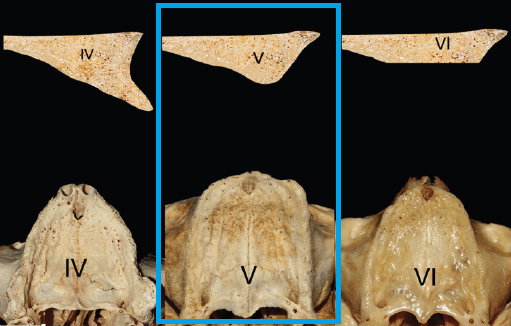
Atrophy of the upper jaw
When there is a significant loss of bone in the posterior area of the upper jaw, either due to bone resorption or sinus pneumatization, the placement of conventional implants may not be viable. Pterygoid implants allow the utilization of the bone in the pterygoid region to achieve posterior anchorage.
Partial rehabilitations
In patients who have lost upper premolares or molars, pterygoid implants can be used as a support for a fixed prosthesis, especially when there is insufficient bone in the posterior area to place conventional implants. Their use can help avoid removable dentures.
Full-arch rehabilitations
When patients present severe tooth loss and atrophy of the upper jaw, pterygoid implants can be combined with implants placed in the anterior area—for example, four anterior implants and two pterygoid implants—to provide posterior support for a fixed prosthesis.
Patients who avoid a bone graft or sinus lift
Pterygoid implants are indicated when the patient’s anatomy allows it, and as an alternative to certain bone regeneration techniques or sinus lift, whether for health reasons, sinus pathology, or a preference to avoid additional surgery.
Rescue of previous treatments
Pterygoid implants can be part of a treatment strategy that includes other types of implants. For example, they serve to resolve any complication or failure we might have with a zygomatic implant. Therefore, it is interesting to place a pterygoid implant when we place zygomatic ones, as a support in case there are complications.
Cases with high masticatory load
In extensive rehabilitations, having adequate posterior support can be important for stability and the distribution of masticatory loads. For this reason, in cases of a long opposing arch or powerful masticatory muscles, where firm posterior supports are advisable, pterygoid implants are highly useful.
Advantages of pterygoid dental implants
Published scientific evidence shows high success rates for pterygoid implants. Although results may vary depending on the characteristics and needs of each specific case, this technique typically offers multiple benefits for most patients.
These are the main advantages of pterygoid dental implants:
They take advantage of the available bone
Permiten obtener un anclaje óseo en una región posterior de mayor densidad ósea, lo que favorece la estabilidad del implante, incluso en los casos de atrofia del maxilar.
They avoid more complex surgeries
By utilizing the available bone in the pterygomaxillary area, they avoid additional surgeries such as bone grafting or sinus lift, and shorten treatment times.
They provide support to the prosthesis
By having a posterior support point, the prosthesis does not need to extend into the air, and forces are distributed more axially, which contributes to the improvement of masticatory function.
Possibility of immediate loading
When the implant achieves good primary stability, there is the possibility of placing a temporary fixed prosthesis within the first 24 hours of the surgery.
Complex rehabilitations
Pterygoid implants serve both to resolve any complication we might have with a zygomatic implant and for full rehabilitations of the upper jaw.
Proven results
In our series of 68 pterygomaxillary implants, the success rate was 97%, with an average bone loss of 0.78 mm per year and a patient satisfaction rating of 9 out of 10.
How a pterygoid dental implant is placed
The anatomy of the pterygoid dental implant placement zone is delicate, and achieving primary stability can be difficult; therefore, treatment always requires specific experience and a personalized study of the case.
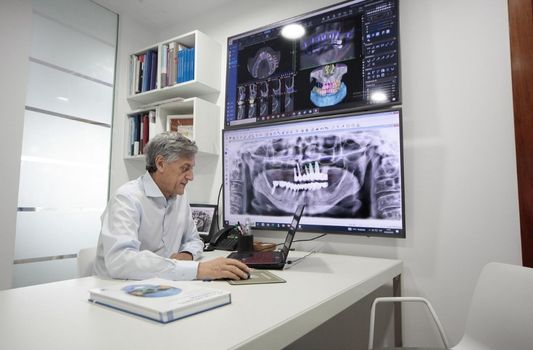
At IDIM, we use a fully digital workflow that allows us to plan each step of the treatment according to the conditions of each patient. These are the phases that make up the treatment with pterygoid implants:
1. 3D study and planning
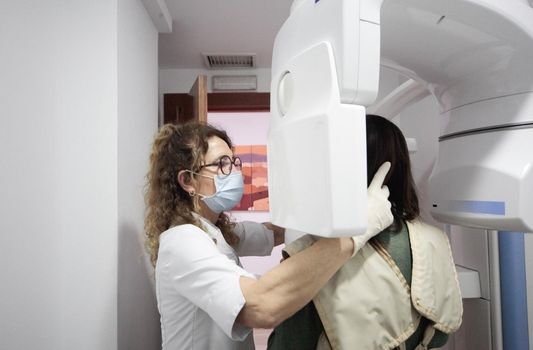
During the first visit, we perform a comprehensive clinical examination that includes the doctor’s exploration, extraoral and intraoral photographs, a panoramic radiograph, and a cone-beam computed tomography (CBCT) scan. With all the information, we precisely determine the quantity and quality of available bone, and digitally plan the position, length, and angulation of each implant. Depending on the case, we design a guided surgery template. guided surgery.
2. Placement of pterygoid implants
The procedure is performed in the clinic itself, under local anesthesia or conscious sedation. Pterygoid implants are placed in the posterior part of the upper jaw, behind the maxillary sinus, until they reach the pterygoid bone. In this way, they avoid the need to perform a sinus lift with a graft to the maxillary sinus floor. They are typically placed together with the anterior implants during the same surgery.
3. Temporary prosthesis
If adequate primary stability of the implants is achieved, there is the possibility of placing a fixed temporary prosthesis on the same day of surgery or within the first 24 hours. This option, known as immediate loading, allows the restoration of aesthetics and function from the very beginning. During this phase, the patient must follow a soft diet and respect the specialist’s instructions to favor healing and implant integration.
4. Placement of the definitive prosthesis
After approximately three or four months, and once the osseointegration of the implants and proper tissue healing have been verified, the definitive prosthesis is manufactured and placed. This is custom-designed to restore masticatory function and achieve an aesthetic result tailored to the characteristics of each patient.
5.
As with any dental implant treatment, there are minor risks, such as the risk of implant infection, which is approximately 3%. To avoid this, it is fundamental to maintain good oral hygiene and attend periodic check-ups for professional maintenance every 6 months. In addition, it is important to reduce or avoid smoking and strictly follow the instructions provided by the specialist.
Why choose IDIM for your pterygoid implants in Valencia?
At IDIM, the pterygoid dental implant technique is planned individually to make the most of the available bone and adapt to each patient’s anatomy. Dr. Miguel Peñarrocha and Dr. David Peñarrocha have extensive experience in treating complex cases of dental implants without bone.
Choosing IDIM for your pterygoid implant treatment in Valencia means:
Experience in complex cases
We specialize in implantology cases and treatments with a higher degree of complexity. Our technique applied in these cases supports our advanced experience and success.
Multidisciplinary medical team
We have a team trained in different fields of oral surgery and implantology in Valencia, who work together to ensure the best results for each treatment.
Cutting-Edge Technology
Our advanced techniques and technology, such as 3D scans and digital planning, allow us to perform precise diagnoses and personalized treatments while minimizing risks.
Personalized Treatment
Since every case is unique, at IDIM we design a tailor-made treatment plan, taking into account each patient’s specific needs to offer the most suitable solutions.
Proven Results
We have numerous success cases in patients who have recovered their teeth and now enjoy a renewed and functional smile thanks to pterygoid implants.
Cost and Financing
We offer personalized quotes, along with financing options of up to 18 months, to facilitate access to your pterygoid implant treatment.
Frequently asked questions about pterygoid implants
If you still have doubts about pterygoid dental implant treatment, below we answer some of the most frequently asked questions that patients ask us in the clinic:
How long does it take to place a pterygoid implant?
By not requiring grafts or a sinus lift, the entire process is shorter than with those techniques. Even so, the time can vary depending on how many implants are placed and whether the entire jaw is rehabilitated. If there is good primary stability, a temporary fixed prosthesis can be placed within 24 hours, and the definitive one after three to four months.
Can pterygoid implants be used to replace several teeth?
Yes. A pterygoid implant does not necessarily have to replace a single tooth. Typically, this technique is used as a posterior support and is complemented with other implants or remaining teeth through a prosthetic rehabilitation. This allows the restoration of several teeth and, in certain cases, the rehabilitation of a full arch.
Does pterygoid dental implant treatment hurt?
During the placement surgery of pterygoid implants, the patient feels no pain since it is performed under local anesthesia, and there is the option to use conscious sedation for greater comfort for both the patient and the specialist. Afterwards, it is normal for swelling and some discomfort to appear during the first few days, similar to other implant surgeries, which are managed with the prescribed medication.
How long does a pterygoid dental implant last?
Implants are designed to last for many years. There are studies on pterygoid implants with follow-ups of up to more than ten years that show very high success rates. The lifespan depends, to a large extent, on hygiene, periodic check-ups, and the daily habits maintained by the patient, such as smoking or bruxism.
Can pterygoid implants be placed if I have low bone density?
Yes. Pterygoid implants are designed to rehabilitate jaws with low bone density in the posterior area without resorting to grafts, provided there is sufficient bone in the pterygoid region. If there isn’t, other alternatives exist, such as zygomatic implants or subperiosteal implants.
How much do pterygoid implants cost in Valencia?
Taking into account that the cost of a dental implant starts from €800 (screw only) and the implant-supported crown from €500, the price of pterygoid implants can be similar. The total cost of the treatment depends on each case and on factors such as the number of implants, digital planning, sedation, and the type of prosthesis. Therefore, the quote is always prepared individually after a initial visit in which a comprehensive study is carried out.
Scientific sources consulted:
Peñarrocha M, Carrillo C, Boronat A, Peñarrocha M. Retrospective study of 68 implants placed in the pterygomaxillary region using drills and osteotomes. Int J Oral Maxillofac Implants. 2009
Candel E, Peñarrocha D, Peñarrocha M. Rehabilitation of the atrophic posterior maxilla with pterygoid implants: a review. J Oral Implantol. 2012 Sep;38 Spec No:461-6.
Peñarrocha-Oltra D, Candel-Martí E, Ata-Ali J, Peñarrocha-Diago M. Rehabilitation of the atrophic maxilla with tilted implants: review of the literature. J Oral Implantol. 2013 Oct;39(5):625-32.
Rodríguez X, Lucas-Taulé E, Elnayef B, Altuna P, Gargallo-Albiol J, Peñarrocha Diago M, Hernandez-Alfaro F. Anatomical and radiological approach to pterygoid implants: a cross-sectional study of 202 cone beam computed tomography examinations. Int J Oral Maxillofac Surg. 2016 May;45(5):636-40.
Start your pterygoid implant treatment in Valencia
At the IDIM Institute of Implantology, led by the Peñarrocha doctors, we don’t just care for your smile—we provide effective solutions backed by our extensive experience and dedication.
We have more than 40 years of experience specialising in dental implantology, using advanced techniques and state-of-the-art technology to achieve the best possible results for our patients.
Fill out the following form and request an appointment to start your pterygoid implant treatment in Valencia.
+34 963 34 46 75