

Dental prosthesis

What are dental prostheses?
In the face of common tooth loss, dental prostheses ensure a complete smile, free of missing teeth that could compromise facial aesthetics. There is a wide variety of dental prostheses, including fixed, removable, full, and partial options.
Thus, a dental prosthesis is simply a device designed to replace missing teeth, guaranteeing proper chewing function, improved swallowing, and speech, as well as serving aesthetic purposes.
The branch of dentistry specializing in prosthetics is prosthodontics, which is responsible for the diagnosis, design, reconstruction, and fitting of the prostheses, always ensuring the right choice for each patient. It is also in charge of follow-up care once installed to guarantee the success of the procedure.
Fill out the contact form if you need to book an appointment at our dental clinic in Valencia:
Frequently asked questions about dental prostheses
If you still have questions regarding zygomatic implant treatment, below we answer some of the most frequently asked questions from our patients:
How do dental prostheses work?
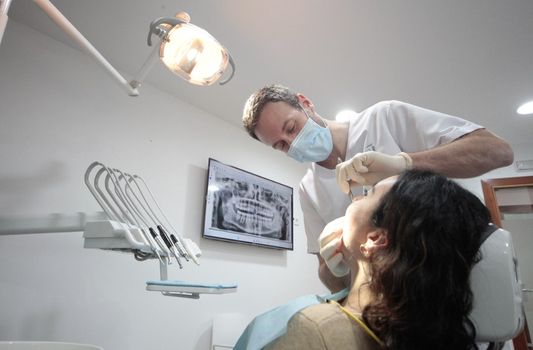
Whether or not it is appropriate to place a dental prosthesis will depend on several factors. This is determined by the specialist at our dental clinic in Valencia, who can provide the patient with a choice of prostheses designed to replace one or multiple teeth that have been lost or extracted.
Technology continues to advance in the field of dentistry to achieve less invasive procedures and a better aesthetic finish. This is the case with prosthodontics, where fixed prostheses—also known as bridges—are used; these are attached to an intermediate pontic by means of two crowns (artificial pieces placed over shaved natural teeth) that support it.
Removable prostheses are also available. These are recommended when the patient still has original teeth that can act as support. Conventional removable dentures, however, are increasingly falling into disuse.
Due to different biomechanical needs, porcelain-fused-to-metal or all-ceramic prostheses are used for fixed restorations, while removable ones are made of resin. Currently, both types of materials allow for excellent aesthetics.
When should a dental prosthesis be placed?
Although it may seem too early for prostheses, they can be used from childhood once permanent teeth are present, right when youngsters have sufficient jaw and gum firmness to support artificial teeth.
Situations may arise that cause teeth to be lost at an early age, which is why replacement is recommended as soon as possible to prevent speech issues.
What are the benefits of using a dental prosthesis?
Getting a dental prosthesis will allow the patient to improve digestion and restore the ability to chew food properly, without having to compensate with other teeth that would otherwise suffer wear and tear.
Another of the most noticeable benefits is aesthetic, as the absence of teeth prevents smiling naturally. With a prosthesis, self-consciousness is left behind. It also prevents teeth from shifting and drifting apart. In conclusion, it restores the comfort and harmony that teeth bring to the face.
Types of dental prostheses
- Fixed prosthesis on teeth (bridges and crowns)
- Removable partial prosthesis (cast partial dentures and acrylic partial dentures)
- Full removable prosthesis (dentures)
- Fixed prosthesis on dental implants
- Overdentures or removable prostheses on dental implants
- Hybrid prosthesis on dental implants
Book an appointment for your dental prosthesis in Valencia
At the IDIM Institute of Implantology, led by the Peñarrocha doctors, we don’t just care for your smile—we provide effective solutions, backed by our extensive experience and dedication.
With over 30 years of specialization in dental implantology, we apply advanced techniques and cutting-edge technology to ensure the best results for our patients.
Fill out the following form and book your appointment for your dental prosthesis in Valencia, with no obligation.
+34 963 34 46 75