Subperiosteal implants
Subperiosteal implants: The alternative solution for patients with bone loss
Subperiosteal implants are a safe and effective alternative for patients with severe bone atrophy who lack sufficient bone for traditional implants. These types of implants are custom-designed to be placed over the bone, serving as a support for fixed prostheses, which allows patients to restore both the function and aesthetics of their smile.
At the IDIM Dental Implant Institute, we are specialists in subperiosteal implant treatment in Valencia. We offer personalized and compassionate care, backed by our team’s expertise in achieving full-arch rehabilitations with a precise fit, which reduces complications and ensures safe, long-lasting results.
Fill out the contact form if you need to book an appointment at our dental clinic in Valencia:
What are subperiosteal or juxtaosseous implants?
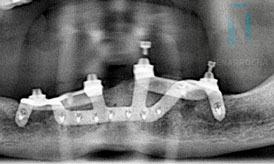
Subperiosteal dental implants, also known as juxtaosseous implants, are specifically designed for patients with severe bone loss in the upper jaw (Grade V and VI atrophies). Unlike conventional implants, which are inserted into the jawbone, these implants rest on the bone surface, beneath the periosteum, using a customized framework that supports them.
Although they have been used for over 50 years, the technique has evolved significantly thanks to digital dentistry. Currently, they can be designed and manufactured with greater precision using 3D scanners and CAD/CAM software. These innovative technologies, combined with new materials and placement procedures, allow for a perfect adaptation to each patient’s anatomy and much more predictable results.
When are juxtaosseous implants recommended?
Juxtaosseous implants are primarily indicated for cases where the patient presents severe atrophy or pathologies that prevent the use of other techniques.
These are the main cases where subperiosteal implants are especially useful:
Severe bone atrophy
When the maxillary or mandibular bone presents severe atrophy (Grades V and VI) and conventional implants are not feasible. In these cases, the placement of juxtaosseous dental implants allows for full-arch rehabilitation using immediate loading with screw-retained fixed provisional prostheses.
Full-arch rehabilitations
Subperiosteal dental implants are specifically indicated for full-arch rehabilitations in cases where patients have insufficient bone volume in the upper jaw. They are also recommended for patients suffering from diseases that directly affect the bone, such as Histiocytosis X.
An alternative to bone grafting
Because subperiosteal dental implants rest on the bone surface, they are a safe and effective alternative to more complex and invasive bone regeneration procedures. This avoids more complicated surgeries and offers a solution for patients who are not suitable candidates for bone grafts.
Advantages of subperiosteal dental implants
The primary advantage of subperiosteal implants is that they provide an effective solution for patients with severe bone atrophy. However, this is not the only benefit; this treatment also offers other significant advantages that make it a safe and durable alternative.
These are the main advantages of subperiosteal dental implants:
A solution for extreme bone loss
They are ideal for full-arch rehabilitations in patients with severe bone atrophy (Grades V and VI) where conventional implants are not a viable option.
Avoids complex bone grafting
They represent a less invasive alternative to bone regeneration surgeries, simplifying the treatment plan by reducing the number of high-complexity surgical interventions.
Customized design
They are custom-designed and manufactured using digital technology (CBCT, CAD/CAM, laser sintering), allowing for a precise fit to the surface of the jawbone and the patient’s specific anatomy.
Possibility of immediate loading
In many cases, immediate loading can be performed using fixed provisional prostheses. This provides the patient with a functional and aesthetic solution on the very same day of the surgery.
Greater stability
When the implant is anchored in the cortical bone, it can be loaded much faster because the mechanical stability of the implant is secured, ensuring predictable results.
Improved quality of life
Quickly restoring the patient’s smile, chewing function, and self-confidence has a profound functional and emotional impact, significantly improving their overall quality of life.
The subperiosteal implant procedure step-by-step
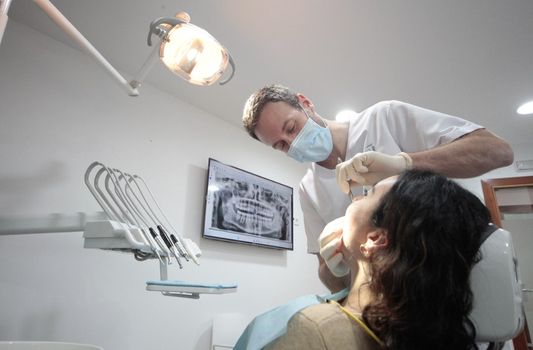
At IDIM, the placement of subperiosteal implants follows a carefully planned procedure executed through a complete digital workflow and a highly specialized team. Furthermore, we tailor the treatment to each patient’s specific needs, ensuring maximum precision and safety.
These are the main phases of the subperiosteal implant treatment:
1. Evaluation and Treatment Planning
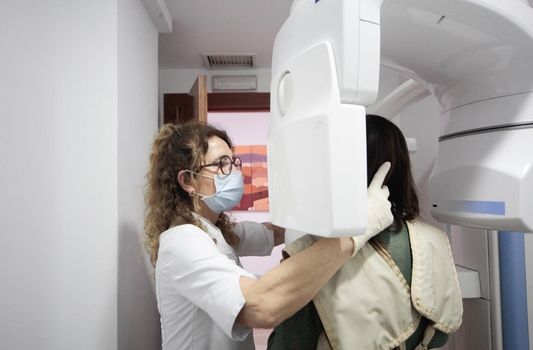
Before surgery, an individualized study of each patient is conducted using advanced imaging tests such as Cone Beam Computed Tomography (CBCT) and intraoral scans. Thanks to improvements in computer-aided design and manufacturing, we can analyze the bone anatomy in detail and design a personalized treatment plan for the placement of the juxtaosseous implant.

2. Pre-surgical Workflow
If the patient has insufficient attached gingiva, a free gingival graft from the palate may be necessary before proceeding with the placement of the subperiosteal dental implants. In cases where tooth extractions (exodontia) are required, it is recommended to wait approximately two months for the soft gingival tissue to heal before continuing with the treatment.

3. Customized Implant Design
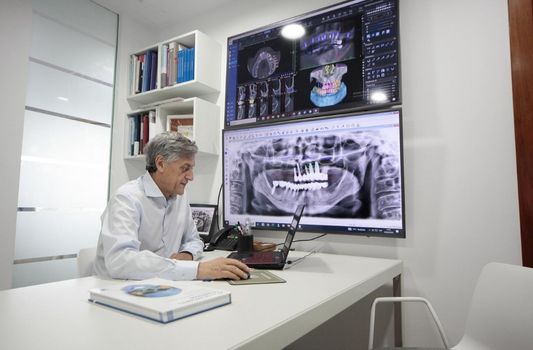
Using the information obtained from the study, the team digitally designs the custom-made implants and plans their positioning on the computer screen. Based on this design, surgical guides (stents) are manufactured to lead the placement of the subperiosteal implant during surgery, ensuring that the structure fits the patient’s bone perfectly.

4. Implant Placement
The surgery is performed under local anesthesia or conscious sedation. The surgeon makes a lingualized or palatalized incision to preserve the maximum amount of keratinized gingiva on the buccal side and places the framework onto the bone, beneath the periosteum. In many cases, immediate loading is possible, allowing for the placement of a screw-retained fixed provisional prosthesis on the same day as the surgery.”

5. Final Prosthesis
After approximately two months of healing and implant adaptation, the final prosthesis is fabricated and fitted. The intraoral scanner allows for the registration of soft tissues before placement. This prosthesis is digitally designed for optimal integration and manufactured using durable, aesthetic materials to ensure a stable, functional, and long-lasting result.
Why choose IDIM for your subperiosteal implants in Valencia?
Now that you are aware of subperiosteal implants in Valencia, it is natural to have questions about which clinic is the best fit for you. At the IDIM Dental Implant Institute, we understand that this is a major decision, and we take pride in having offered tailored solutions for every patient throughout our long-standing history in dental implantology.
Below, we outline the services we offer for your subperiosteal implant treatment in Valencia:
Experience in complex cases
We specialize in dental implant cases and treatments that present a higher degree of complexity. Our advanced techniques in these scenarios are a testament to our expertise and success.
Multidisciplinary Team
Our team consists of specialists trained in various fields such as surgery, implantology, and bone regeneration, working together to ensure the best possible results for every treatment.
Cutting-Edge Technology
Our advanced techniques and technology, such as 3D scans and digital planning, allow us to perform precise diagnoses and deliver fully predictable and personalized treatments.
Personalized Treatment
Because we know that every case is unique, at IDIM we design a tailored treatment plan, taking your specific needs into account and offering the most suitable solutions for your case.
Proven Results
We have numerous success stories of patients who, despite having no bone and having lost several teeth or even an entire arch, now enjoy a renewed, healthy, and functional smile.
Subperiosteal implants: Before and after photos
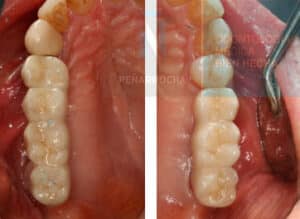
We know that learning about other patients’ experiences can help you make the decision to start your treatment. Seeing real results provides a clear idea of how subperiosteal implants can transform a smile and a patient’s quality of life.
In this case, we show the before and after of a patient with severe bone atrophy and the rehabilitation achieved thanks to subperiosteal implant treatment in Valencia:
Before
During
After
Frequently Asked Questions about subperiosteal or juxtaosseous implants
If you still have questions regarding subperiosteal implants in Valencia, below we answer some of the most common questions our patients ask during their consultations:
How long does the subperiosteal implant treatment take?
Generally, the total duration for subperiosteal implant treatment is between 2 and 4 months, although the exact timeframe is determined after an individualized assessment. In most cases, a fixed provisional prosthesis can be placed immediately, and the final prosthesis is installed after a few months of healing.
Are subperiosteal implants permanent?
Yes, subperiosteal implants are designed to be a long-term solution. Their durability depends on oral health, proper maintenance, and the quality of the bone and surrounding tissues. It is essential to follow the specialist’s instructions and attend regular check-ups to ensure maximum longevity.
What maintenance do juxtaosseous implants require?
Careful oral hygiene is essential after the placement of juxtaosseous implants, including brushing and using dental floss or interdental brushes. Additionally, it is recommended to attend periodic follow-up appointments with your specialist, avoid smoking, and manage conditions such as diabetes or excessive alcohol consumption.
How do subperiosteal implants differ from zygomatic and pterygoid implants?
Subperiosteal dental implants are placed on top of the maxillary bone in cases with limited bone volume, without the need for grafts. In cases of more severe atrophy, zygomatic implants are anchored into the cheekbone (zygoma), while pterygoid implants are fixed behind the maxillary sinus, providing stability in the posterior area.
How much do subperiosteal implants cost in Valencia?
The cost of subperiosteal implants in Valencia can vary significantly depending on several factors, such as the complexity of the case and the specific needs of the patient. Therefore, at the IDIM Dental Implant Institute, we always provide a personalized quote for each patient following a precise diagnosis.
Start your subperiosteal implant treatment in Valencia
At the IDIM Institute of Implantology, led by the Peñarrocha doctors, we don’t just care for your smile—we provide effective solutions backed by our extensive experience and dedication.
With over 30 years of specialization in dental implantology, we apply advanced techniques and cutting-edge technology to ensure the best results for our patients.
Fill out the following form and book an appointment to start your subperiosteal implant treatment in Valencia.
+34 963 34 46 75