

Angulated implants
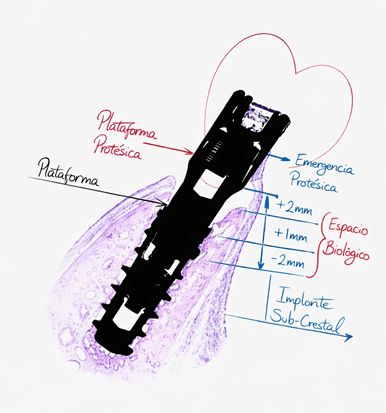
When there is not enough bone available to safely place implants in a straight position, angulated implants offer an alternative. This technique makes it possible to rehabilitate jaws with bone atrophy without the need for bone grafts or more complex surgery, preserving the vestibular cortical bone whenever possible.
At Instituto De Implantología IDIM, like dental implant clinic in Valencia, we have more than 40 years of experience treating cases of bone atrophy, including the most complex ones. We use protocols supported by numerous scientific publications and assess each case individually to provide the most appropriate solution.
Fill in the contact form if you need to book an appointment at our dental implant clinic in Valencia:
What are angulated dental implants?
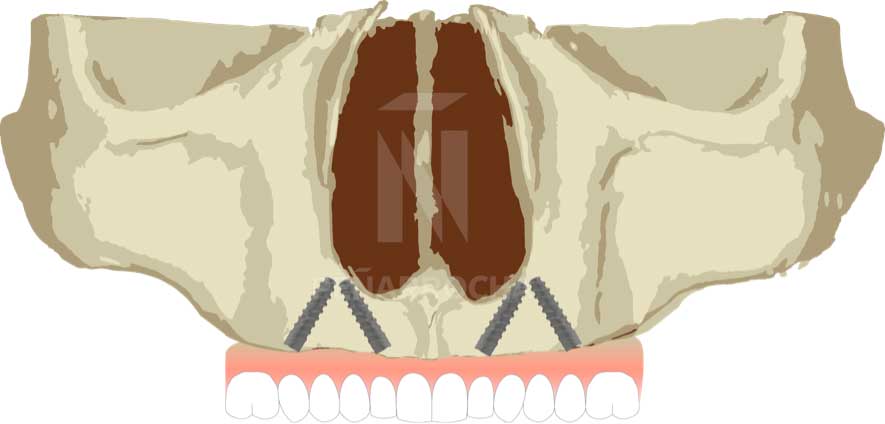
Angled implants are dental implants that are placed at an inclination of at least 25-45º, unlike conventional implants, which are inserted in a completely straight (axial) position. This angulation also makes it possible to place longer implants than would be possible in a straight position, providing greater primary stability.
The main purpose of this angulation is to make use of the greater volume of bone available in areas where it is denser and more stable. It also helps avoid anatomical structures such as the maxillary sinus or the inferior alveolar nerve, reducing the need for additional surgical procedures and the risks associated with these structures.
When are angulated dental implants indicated?
Angled dental implants are especially indicated in cases where the patient’s anatomy complicates the placement of implants in a conventional position.
Some of their main indications are:
Patients with severe bone atrophy
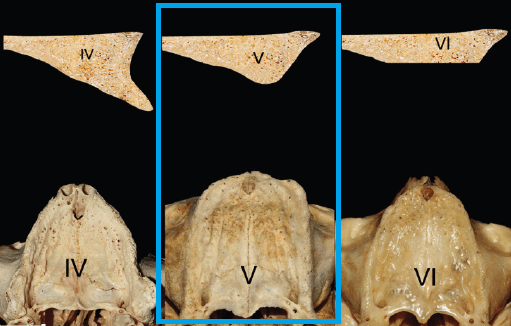
Angled implants are especially indicated in cases of grade V maxillary atrophy, where the available bone does not allow the placement of a straight implant of adequate length. The strategic inclination of these implants allows making the most of the available bone areas.
Patients with total tooth loss
Their use is beneficial in full-arch rehabilitations, such as All-on-4 treatments, where the posterior implants are placed with a strategic inclination to maximize the available bone and provide better support for the prosthesis.
Proximity to the maxillary sinus
In cases where patients present bone loss in the upper jaw, tilting the implant allows utilizing the residual bone while staying away from the maxillary sinus. This avoids risks and more complex treatments such as maxillary sinus elevation.
Full-arch rehabilitations
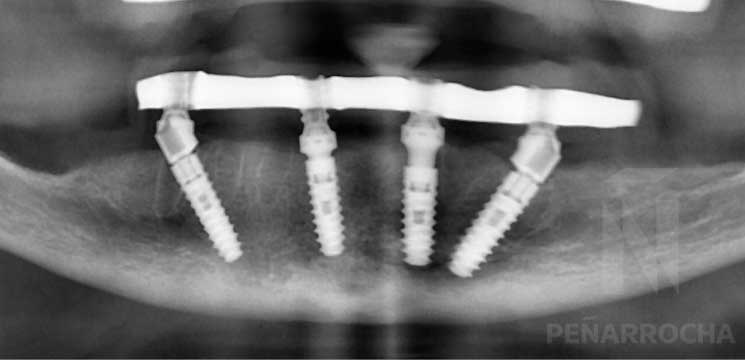
When there is insufficient bone height, posterior implants can cause injury to the inferior alveolar nerve if vertical grafts are not performed. Therefore, in these cases, 4 intermental implants are placed: two angled distal implants and two central mesial implants.
Advantages of angled implants
The strategic placement of anguled implants allows utilizing the available bone and simplifying the treatment for certain patients.
These are the main advantages of tilted implants:
Greater primary stability
They allow anchoring the implants in areas with greater bone availability and density, promoting adequate primary fixation and a better distribution of loads.
Less invasive surgeries
They reduce the need for more complex procedures such as bone grafts or maxillary sinus elevations, simplifying the treatment and reducing its duration.
Predictable results
They present success and osseointegration rates comparable to those of axial implants, with clinical results backed by the available scientific literature.
Possibility of immediate loading
When adequate primary stability is achieved, they allow the placement of a fixed provisional prosthesis on the same day of surgery or within the first 24 hours.
How an angulated dental implant is placed
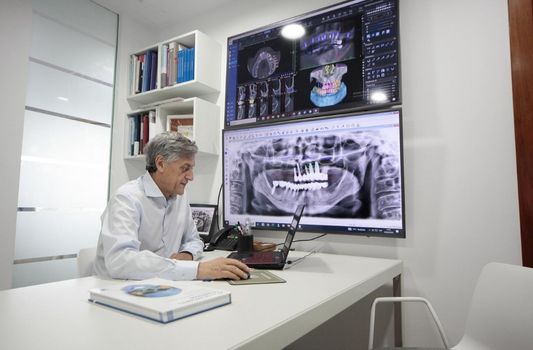
Angled implant treatment always begins with a personalized study to assess the case. At IDIM, we use a fully digital workflow that allows us to design the most suitable treatment plan for each patient and plan the surgery with precision.
1. Comprehensive diagnostic assessment
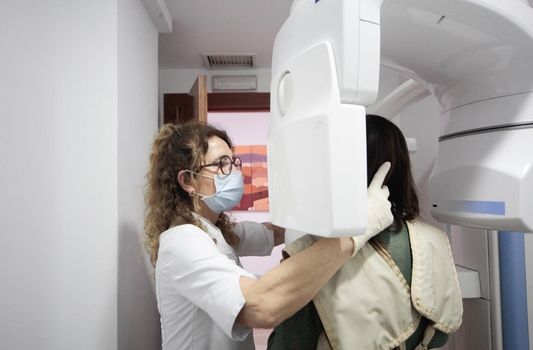
The treatment begins with an X-ray and a cone beam computed tomography (CBCT), along with clinical photographs and a comprehensive case study. With this information, we accurately determine the quantity and quality of available bone, allowing us to digitally plan the number of implants and the exact angulation of each one.
2. Placement of the angulated implants
The implants are placed slightly angled (generally between 25° and 45°) depending on the direction of the available bone, always aiming to avoid anatomical structures like the maxillary sinus or the inferior alveolar nerve, which could compromise the treatment. Depending on the case, this technique can be performed using guided surgery and combined with axial implants, such as an All-on-Four.
3. Primary fixation and definitive prosthesis
Following implant placement, if there is sufficient primary stability, a fixed provisional prosthesis can be placed on the same day or within the first 24 hours (immediate loading). After a few months of healing and once the osseointegration period is complete—which usually lasts between 3 and 6 months—the provisional prosthesis is replaced by the definitive one.
4. Treatment follow-up
As with any surgical treatment, there are minor risks: the risk of implant infection is approximately 3%. Therefore, it is essential to maintain good oral hygiene, attend regular check-ups, undergo professional maintenance every 6 months, reduce or avoid smoking, and strictly follow the specialist’s instructions.
Where can an angulated implant be placed?
Lower angulated implants
In the mandible, dental implants are strategically tilted to maximize the available bone and stay away from the inferior alveolar nerve, reducing the risk of injury to this anatomical structure. Furthermore, this angulation allows the use of longer implants and improves their distribution along the entire arch.
This planning promotes a more balanced distribution of loads on the fixed prosthesis, contributing to a stable and functional rehabilitation.
Upper angulated implants
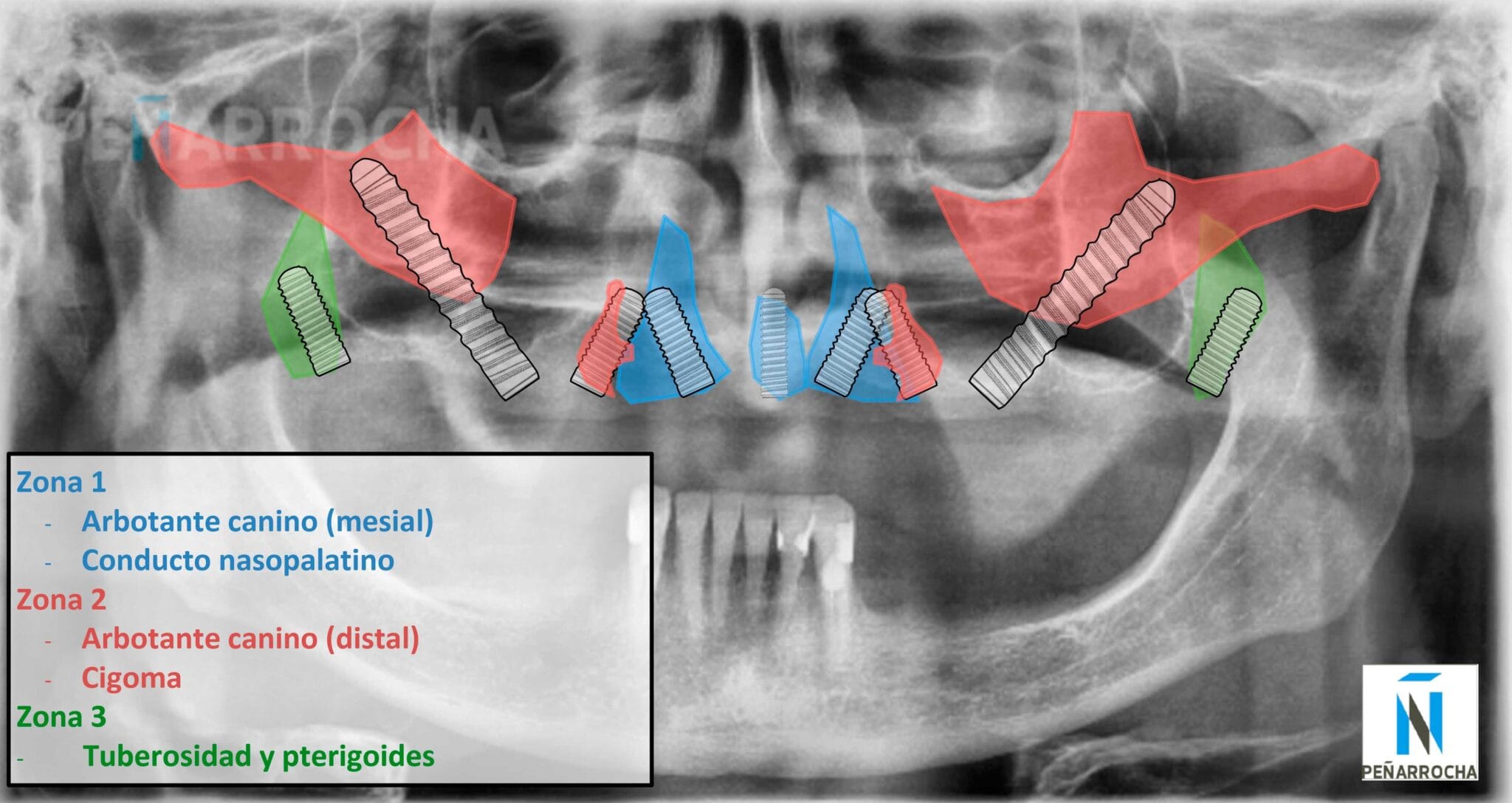
In the upper jaw, tilting the implants allows utilizing specific anatomical structures with greater bone availability, such as the frontomaxillary and pterygoid pillars, the nasopalatine region, or the zygomatic area.
This strategy avoids the maxillary sinus and reduces the need for more complex procedures such as sinus lifts. It is especially useful in patients with moderate or severe maxillary atrophy, where the available bone height is insufficient to place conventional implants in an axial position.
Why choose IDIM for your angulated implants in Valencia?
At IDIM, the angled implant technique is planned individually to maximize the available bone and adapt to each patient’s anatomy. Dr. Miguel Peñarrocha Diago and Dr. David Peñarrocha have extensive experience in dental implants without bone.
Choosing IDIM for your tilted implant treatment in Valencia means:
Experience in complex cases
We specialize in complex implantology cases and treatments. Our expertise in managing these cases demonstrates our advanced experience and successful outcomes.
Multidisciplinary medical team
We have a team of specialists trained in different areas of oral surgery and implantology in Valencia, working together to ensure the best possible results for each treatment.
Cutting-Edge Technology
Our advanced techniques and technology, including 3D scanners and digital treatment planning, allow us to perform precise diagnoses and personalized treatments while minimizing risks.
Personalized Treatment
As every case is unique, at IDIM we design a tailored treatment plan, taking into account each patient’s specific needs to provide the most appropriate solutions.
Proven Results
We have numerous success stories of patients who have recovered their teeth and today enjoy a renewed and functional smile thanks to angled implants.
Cost and Financing
We offer personalized budgets, along with financing options of up to 18 months, to facilitate access to your angled implant treatment.
Frequently asked questions about angulated implants
If you still have doubts about angled implant treatment, below we answer some of the most frequently asked questions that our patients ask during consultations:
Are angled implants as safe as conventional ones?
Yes, and it has been proven that the success rate of angled implants is very similar to that of conventional dental implants. Their prognosis is comparable, provided that the treatment is correctly planned and executed by experienced specialists.
Is it painful to place an tilted dental implant?
The surgery is performed under local anesthesia or conscious sedation, so you should not feel pain during the procedure. After the intervention, it is normal to experience some minor discomfort or mild swelling, similar to any implant surgery, but it is well controlled with the painkiller routine prescribed by the specialist.
How long does it take for an angled implant to heal?
The healing phase, known as the osseointegration period, usually lasts between 3 and 6 months, although it depends on factors such as the quality of the available bone and the primary fixation achieved. In many cases, if there is good initial stability, it is possible to place a fixed provisional prosthesis (immediate loading) within the first 24 hours.
Can angulated implants be placed in any patient?
Many patients are candidates, but there are also other alternatives such as palatalized implants or zygomatic implants. Each case must be assessed individually and personally through a complete radiological study (CBCT). Uncontrolled systemic diseases, smoking, and other active infections are factors that can condition the treatment.
What is the success rate of tilted dental implants?
Tilted dental implants have success and survival rates comparable to those of conventional implants, which can be around 97% when the treatment is correctly planned and executed.
What is the price of angulated implants in Valencia?
The price of a tilted dental implant with low bone density is similar to that of a conventional implant. The cost may vary depending on the needs of each patient; therefore, after performing the study and personalized planning of the case, we will indicate the most suitable option and the treatment budget.
Scientific sources consulted:
Peñarrocha-Oltra D, Candel-Martí E, Ata-Ali J, Peñarrocha-Diago M. Rehabilitation of the atrophic maxilla with tilted implants: review of the literature. J Oral Implantol. 2013 Oct;39(5):625-32.
Peñarrocha Diago M, Maestre Ferrín L, Peñarrocha Oltra D, Canullo L, Calvo Guirado JL, Peñarrocha Diago M. Tilted implants for the restoration of posterior mandibles with horizontal atrophy: an alternative treatment. J Oral Maxillofac Surg. 2013 May;71(5):856-64.
Tallarico M, Canullo L, Pisano M, Peñarrocha-Oltra D, Peñarrocha-Diago M, Meloni SM. An up to 7-Year Retrospective Analysis of Biologic and Technical Complication With the All-on-4 Concept. J Oral Implantol. 2016 Jun;42(3):265-71.
Soto-Penaloza D, Zaragozí-Alonso R, Penarrocha-Diago M, Penarrocha-Diago M. The all-on-four treatment concept: Systematic review. J Clin Exp Dent. 2017 Mar 1;9(3):e474-e488.
Penarrocha-Diago M, Penarrocha-Diago M, Zaragozí-Alonso R, Soto-Penaloza D, On Behalf Of The Ticare Consensus M. Consensus statements and clinical recommendations on treatment indications, surgical procedures, prosthetic protocols and complications following All-On-4 standard treatment. 9th Mozo-Grau Ticare Conference in Quintanilla, Spain. J Clin Exp Dent. 2017 May 1;9(5):e712-e715.
Peñarrocha M, Carrillo C, Boronat A, Peñarrocha M. Retrospective study of 68 implants placed in the pterygomaxillary region using drills and osteotomes. Int J Oral Maxillofac Implants. 2009 Jul-Aug;24(4):720-6.
Candel E, Peñarrocha D, Peñarrocha M. Rehabilitation of the atrophic posterior maxilla with pterygoid implants: a review. J Oral Implantol. 2012 Sep;38 Spec No:461-6.
Start your angulated implant treatment in Valencia
At IDIM (Instituto De IMplantología) by Drs. Peñarrocha, we do not only take care of your smile, but we also offer effective solutions thanks to our extensive experience and dedication.
We have more than 40 years of experience specialising in dental implantology, using advanced techniques and state-of-the-art technology to achieve the best possible results for our patients.
Fill out the following form and request an appointment for your angled implant treatment in Valencia with no obligation.
+34 963 34 46 75