

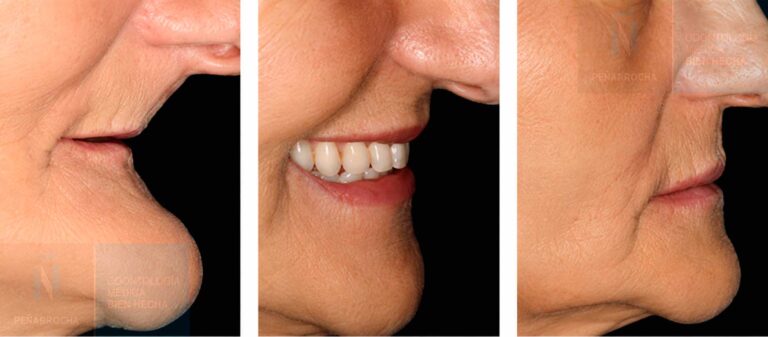
Severe bone loss in the maxilla is one of the main consequences of tooth loss, long-term use of removable dentures, or certain conditions such as periodontal disease. When bone volume decreases significantly, this is known as an atrophic maxilla, a condition that can make the placement of conventional dental implants more difficult.
However, not having enough bone to place dental implants does not mean having to give up on fixed teeth. Today, advanced solutions are available for complex cases, making it possible to restore both the aesthetics and function of the mouth, even in cases of severe bone atrophy.
Precise and personalised treatment planning makes it possible to successfully treat many cases of an atrophic maxilla. Keep reading this article to discover the available solutions for placing dental implants without bone.
Índice
What is an atrophic maxilla?
An atrophic maxilla is one that has experienced a significant loss of bone volume and density. As a result, the available bone may no longer be sufficient to support the natural teeth or to place conventional dental implants.
After tooth loss, the bone and the surrounding tissues begin to atrophy, leading to maxillary atrophy. If an implant is not placed to replace the missing tooth, the bone no longer receives the stimulation provided by chewing and gradually begins to resorb. Over time, the maxillary bone becomes increasingly atrophied and the gum tissue becomes thinner.
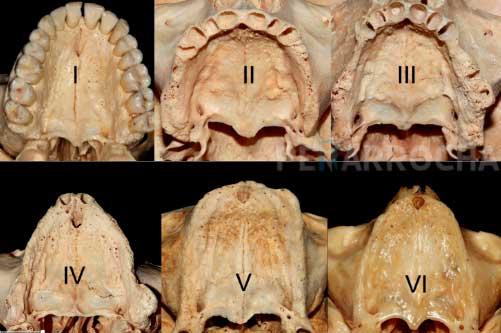
Depending on the extent of bone loss, there are different degrees of maxillary atrophy:
- Mild or moderate atrophy (grades III and IV): In these initial stages, vertical atrophy occurs, causing the alveolar process to become narrower and progressively decrease in volume. Although the amount of available bone is reduced, implants can often still be placed using specific techniques.
- Severe and extreme atrophy (grades V and VI): As bone loss progresses, grade V horizontal atrophy develops, resulting in a reduction in both the width and height of the alveolar process. In more advanced stages, the buccal cortical bone may be completely lost.
Why does bone loss occur in the maxilla?
Bone loss in the upper jaw is a progressive process that can have different causes. The most common include:
- Prolonged absence of teeth: When a tooth is lost and not replaced, the bone that supported it no longer receives the stimulation provided by chewing and gradually begins to resorb.
- Use of removable dentures: Wearing dentures for many years can contribute to the resorption of the maxillary bone because, as they rest on the gums, they do not transmit chewing forces directly to the bone.
- Periodontal disease: Chronic inflammation progressively damages the tissues supporting the teeth, which can lead to tooth mobility and resorption of the alveolar bone.
- Infections and trauma: Certain dental infections or injuries caused by blows or accidents can damage the maxillary bone and accelerate bone loss if they are not treated in time.
- Ageing: As the years go by, it is common for bone density and volume to decrease. Although this is a physiological process, it can be aggravated when teeth have been missing for long periods.
- Systemic diseases and other risk factors: Certain conditions, such as osteoporosis, specific medical treatments, and habits such as smoking, can also contribute to the development of an atrophic maxilla.
Can dental implants be placed in an atrophic maxilla?
Yes. In most cases, it is possible to place dental implants in an atrophic maxilla. However, the treatment will depend on the degree of bone atrophy, the quantity and quality of the available bone, and each patient’s individual characteristics. After a comprehensive clinical and radiological assessment, the specialist will determine the most appropriate technique for each case.
Treatment options for rehabilitating an atrophic maxilla include:
- Bone regeneration procedures: such as bone grafting or sinus lift surgery, when it is necessary to increase the amount of available bone before placing the implants.
- Implants anchored in the maxillary buttresses: by taking advantage of strategic areas of the maxilla where the bone is denser and stronger, making it possible to avoid regenerative procedures in many patients.
Advantages of dental implants without bone
Having an atrophic maxilla does not mean that a patient cannot have a fixed dental rehabilitation. Thanks to modern implantology techniques, it is now possible to place dental implants without bone.
The main advantages of placing dental implants without bone in the upper jaw include:
- Permanent replacement of missing teeth: they allow the mouth to be rehabilitated with a fixed and stable solution, even in advanced cases of bone loss.
- Greater comfort in everyday life: by eliminating the need for removable dentures, patients can enjoy greater stability and comfort in their daily lives.
- Improved chewing function: they restore the ability to chew normally, allowing patients to enjoy a more complete and varied diet.
- Natural-looking aesthetic results: dental implants without bone can achieve a more harmonious and natural-looking result compared with other alternatives.
- Bone preservation: by transmitting chewing forces to the maxillary bone, they can help slow down further bone deterioration.
- Less invasive treatments: the most advanced implantology techniques can make it possible to carry out complex cases with less invasive surgical procedures.
Types of dental implants without bone for an atrophic maxilla
Depending on the degree of atrophy, there are different treatment options for patients who need dental implants without bone:
Palatalized implants
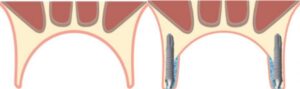
Palatalized implants are placed by taking advantage of the bone in the palate, an area that usually maintains excellent bone quality and density even in patients with significant bone loss in the upper jaw. Thanks to this technique, it is possible to achieve stable implant fixation.
Bone grafting
Bone grafting is a technique indicated when there is not enough bone to safely place dental implants. This procedure makes it possible to regenerate the lost bone volume and create a solid foundation on which the dental implants can subsequently be placed, ensuring their long-term stability.
Sinus Lift
Sinus lift is a technique used in patients with bone loss in the posterior region of the upper jaw. It involves lifting the sinus membrane and increasing the amount of available bone so that dental implants can be placed in an area where this would not initially be possible.
Angulated implants in an atrophic maxilla
Angulated implants allow the available bone to be used to its full potential by modifying the direction in which the implant is inserted. This makes it possible to avoid anatomical structures such as the maxillary sinus or the inferior alveolar nerve and achieve a fixed rehabilitation.
Pterygoid implants
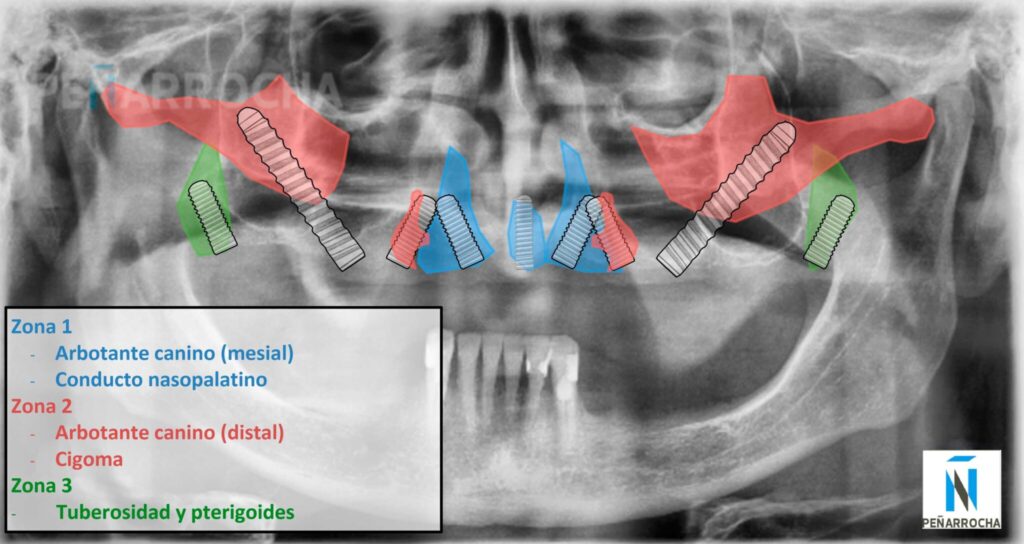
Pterygoid implants are indicated for patients with significant bone loss in the posterior region of the upper jaw. They are anchored in the pterygoid bone, which has a high density, making it possible in many cases to place implants without the need for bone grafting or a sinus lift.
All-On-Four Implants
All-on-Four implant technique makes it possible to rehabilitate complete dental arches by strategically placing four or six implants and taking advantage of the available bone. It is also often combined with immediate loading, allowing the patient to have a fixed provisional prosthesis on the same day as the procedure.
Zygomatic implants without bone
Zygomatic implants are one of the main solutions for the most severe cases of bone atrophy in the upper jaw. They are anchored in the zygomatic bone (cheekbone), which provides excellent stability, making it possible to rehabilitate patients with very little bone without the need for complex bone grafting procedures.
Subperiosteal implants
Subperiosteal implants are indicated for patients with extreme bone atrophy in whom conventional implants cannot be placed. They are custom-made to fit the surface of the maxillary bone and provide stable support for fixed prostheses, even in full-mouth rehabilitations.
Where can dental implants without bone be placed?
In patients with an atrophic maxilla, dental implants can be placed in different areas depending on the amount and quality of the available bone. The location selected will determine the most appropriate surgical technique and type of implant for each case.
Depending on the area where the implants are anchored, there are different treatment options:
1. Dental implants without bone in the upper jaw
The upper jaw often presents a greater degree of bone resorption, particularly in the posterior region, where the proximity of the maxillary sinus can limit the use of conventional implants. Zygomatic, pterygoid and palatalised implants make it possible to take advantage of strategic areas with better bone quality.
2. Dental implants without bone in the lower jaw
In the lower jaw, the proximity of the inferior alveolar nerve affects the length and angulation of the implants. Short or angled implants are specifically designed for areas with limited bone, while also reducing the risk of damaging sensitive structures such as the nerve.
3. Dental implants without bone for the entire mouth
When a patient has lost all their teeth and has severe bone loss, a full-mouth rehabilitation may be possible. Techniques such as All-on-Four or All-on-Six allow a fixed prosthesis to be supported by a reduced number of strategically positioned implants, making the most of the available bone.
How are dental implants without bone placed?
Placing dental implants in cases of severe bone loss requires a thorough evaluation and precise planning. Thanks to advanced oral surgery and implantology techniques, it is possible to restore many cases of atrophic maxilla with safe, long-lasting results.
Below, we explain step-by-step how dental implants are placed when there is bone loss:
1. Initial consultation: diagnosis and treatment planning
The first step is to carry out a comprehensive, personalised assessment to evaluate the quantity and quality of the available bone. This includes an extraoral panoramic X-ray and a 3D scan (CBCT), allowing us to plan the treatment on a fully personalised basis.
2. Implant Placement
Dental implant surgery without bone is performed under local anaesthesia or conscious sedation. Depending on the degree of bone loss, specific techniques are used to make the most of the available bone. In some patients, inmediate loading is possible, allowing a fixed provisional prosthesis to be placed on the same day.
3. Implant osseointegration
After the procedure, the osseointegration process begins. This period usually lasts between 2 and 4 months, during which the implant biologically integrates with the bone, providing a stable and long-lasting foundation. While the implants heal, the definitive prostheses are fabricated.
4. Placement of the definitive prosthesis
Once the implants have successfully integrated, the definitive prosthesis is fitted. It is fully customised, taking into account both functionality and aesthetics to achieve a natural, comfortable and long-lasting result.
Every case is different. In some patients, the available bone can be used through advanced techniques, while in others, bone regeneration procedures may be necessary. This can extend the treatment time and require additional surgical procedures.
Patient testimonials about dental implants without bone
Mercedes came to our clinic with severe maxillary atrophy, which had caused both functional and aesthetic deterioration. Thanks to rehabilitation with dental implants without bone, she has regained her smile and can eat normally, contributing to a significant improvement in her quality of life.
“I can smile, something I couldn’t do before, and eat whatever I want. I’m very happy.”
https://www.youtube.com/watch?v=qhAKgUsCmXM
Frequently Asked Questions about an atrophic maxilla and dental implants
Bone loss in the upper jaw raises many questions for patients, especially when they have been told that they do not have enough bone to support dental implants.
Below, we answer the most frequently asked questions about dental implants for patients with an atrophic maxilla:
How long does treatment with implants for an atrophic maxilla take?
The duration of treatment depends on the degree of atrophy and the technique used. In many cases, it is possible to place a fixed provisional prosthesis within 24–48 hours after surgery, reducing waiting times. In general, the complete treatment, up to the placement of the definitive prosthesis, usually takes between 3 and 6 months.
Are dental implants without bone safe?
Yes, dental implants without bone for patients with an atrophic maxilla are a safe option when the treatment is carefully planned and performed by a team experienced in complex cases. Techniques such as zygomatic and pterygoid implants, for example, have high success rates.
Can a dental implant be placed without a bone graft?
Yes, in many cases, it is possible. Thanks to advanced techniques such as zygomatic, pterygoid or palatalised implants, many patients with an atrophic maxilla are suitable candidates for dental implants without the need for a bone graft.
Can dental implants without bone be placed in a single day?
Yes, in some cases, it is possible. The implants can be placed in a single procedure, and the patient may also leave the clinic with a fixed provisional prosthesis within 24–48 hours. This option depends on each patient’s individual characteristics and requires a prior assessment.
How much does a dental implant without bone cost?
The cost depends on factors such as the degree of maxillary atrophy, the technique used and the number of implants required. Therefore, there is no single price that applies to all patients. At IDIM, we carry out a personalised assessment to evaluate each case and recommend the most appropriate treatment, along with a detailed treatment plan and cost estimate.
Scientific sources consulted:

Book an appointment for your dental implants without bone in Valencia
At Instituto De IMplantología IDIM, founded and led by Drs. Peñarrocha, we not only take care of your smile, but are also a clinic specialising in dental implants without bone, offering effective solutions thanks to our extensive experience and dedication.
We have more than 40 years of experience specialising in dental implantology, using advanced techniques and state-of-the-art technology to achieve the best possible results for our patients with an atrophic maxilla.
Fill in the following form and book an appointment to start your dental implant treatment without bone in Valencia.